
Wood heat, done right
Heat your home with wood, without the guesswork
Heat with wood, do it right. Every guide starts with the number or rule you need: moisture below 20 percent, a full cord at 128 cubic feet, 36 inches to an unprotected wall. Then we explain the rest.
How we write
What you get in every guide
The quick answer first
Every article opens with a box that gives you the number, the rule or the decision before you read another word. If all you needed was 20 percent moisture, you are done.
Real figures, not adjectives
We say below 20 percent moisture, a cord at 4 by 4 by 8 feet, and 36 inches to an unprotected wall. We do not say properly seasoned and leave you guessing.
Timed to the burning year
Buy and split in spring, stack through summer, sweep before the first fire, clean ash in spring. Our advice lands when you actually need it.
Safety you can check
Guidance grounded in NFPA 211 and CSA B365, with a standing reminder: your stove label and manual come first. When a job needs a CSIA or WETT certified pro, we say so.
How we work
Our ground rules
100%
Independent. We do not sell stoves, wood or chimney services
2
Standards behind our safety advice: NFPA 211 and CSA B365
4
Parts to every problem guide: cause, check, fix, when to call a pro
1
Rule above all rules: your stove label and manual come first
Start where you are
Who this site is for
Bought a house with a stove? Start here.
You inherited a wood stove or fireplace insert and no manual. First job: find the certification label on the back or bottom. That label lists the clearances, the required floor protection and the chimney type, and it overrules anything generic you read, including us.
Then get the chimney inspected before your first fire. A CSIA certified sweep in the US or a WETT certified inspector in Canada can tell you if the liner is sound and the flue is the right size. One visit, and you know what you actually own.
A stove for when the power goes out.
If you want wood as backup heat, size the stove to the space, not the whole house. An oversized stove smolders, makes creosote and drives you out of the room. A smaller stove burning hot and clean beats a big one choked down.
Plan your wood supply a year ahead. Most hardwoods need 6 to 12 months split and stacked to get below 20 percent moisture. The winter you want heat is not the winter to buy green wood.
You know how to burn. Burn cleaner.
You have split more wood than you care to remember. What changes things now is the newer stove technology: secondary combustion, where gases that used to go up the flue get burned off for extra heat. Modern EPA certified stoves can cut smoke sharply compared to pre-1990 units.
We also dig into the habits that cause trouble even for experienced burners: overnight smoldering, wet shoulder-season wood, skipped chimney checks. Small fixes, real differences in creosote and heat output.
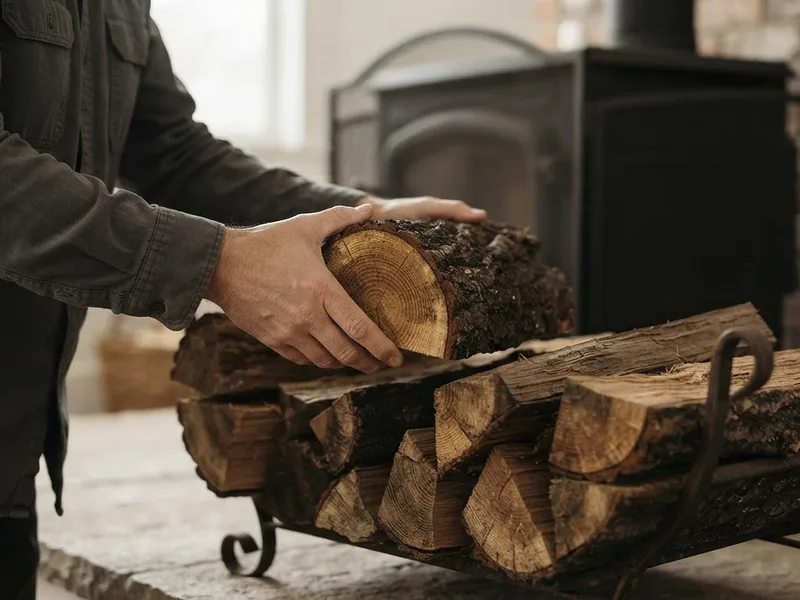
Firewood is the fuel, so treat it like one
Most wood heat problems are wood problems. Green wood hisses, smokes and coats your flue with creosote because half the fire's energy goes into boiling off water instead of heating your room. Dry wood lights fast, burns hot and keeps the glass clean.
Know your terms before you buy. A full cord is a stacked pile 4 feet high, 4 feet deep and 8 feet long, or 128 cubic feet. A face cord is one row of that pile, so its volume depends entirely on the log length. Ask for the length before you pay.
Get a moisture meter. They cost little and settle every argument. Split a piece, press the pins into the fresh face, and look for a reading below 20 percent. That single number matters more than anything the seller tells you.
The woodburning year
Your first season, step by step
Spring: buy and split
Order or cut your wood in spring and split it now. Split wood dries far faster than rounds because more surface is exposed. Stack it off the ground with sun and wind access.
Summer: stack and wait
Let the stack breathe. Cover the top only, never wrap the sides in plastic. Softwoods can be ready in about 6 months, dense hardwoods often need 12 months or more.
Fall: sweep and inspect
Before the first fire, have the chimney checked and swept if needed. Creosote under about 1/8 inch is normal; more than that is fuel for a chimney fire.
Winter: burn hot and clean
Burn small, hot fires with dry wood instead of one smoldering log. Give the fire air, watch the flue temperature, and never close the air supply down for an all-night smolder.
Spring again: ash and review
Remove ash once it builds past an inch or so, always into a metal container with a lid, stored outside away from anything flammable. Embers can stay live for days.
Questions we hear most
How do I know if my firewood is dry enough to burn?
Use a moisture meter on a freshly split face and look for below 20 percent. Without a meter, dry wood is lighter, has cracks at the ends, sounds hollow when two pieces knock together, and the bark peels easily. Hissing and sizzling in the firebox means it is too wet.
What is the difference between a cord and a face cord?
A full cord is a stacked pile measuring 4 feet high, 4 feet deep and 8 feet long, 128 cubic feet total. A face cord is a single row of that pile, so its actual volume depends on how long the logs are cut. Always ask the log length before comparing prices.
How far does a wood stove need to be from the wall?
A common figure for an unlisted stove is 36 inches to an unprotected wall, but there is no single number that fits every stove. Listed stoves carry their clearances on the certification label and in the manual, and those figures, often reduced by approved wall shields, are the ones that count.
How often should the chimney be swept?
NFPA 211 and CSA B365 both call for an annual inspection, with cleaning when needed. Burn dry wood with a hot fire and you may go longer between sweepings. Smolder green wood and you may need one mid-season. The inspection answers the question.
Can I install a wood stove myself?
Sometimes, but read the fine print first. Many insurers and local codes require a permit and inspection, and in parts of Canada a WETT inspection is effectively mandatory for insurance. A mistake in clearances or chimney connection is not visible until it matters. When in doubt, hire a certified installer.
Not sure where to start? Ask.
Tell us your setup, your stove or your wood situation, and we will point you to the right guide or the right next step. No sales pitch, just a straight answer.